Hotel construction is one of the most finish-intensive building types. Between guest rooms, lobbies, corridors, restaurants, and amenity spaces, the finish package on a hotel project can easily run into the millions. That makes hospitality one of the best candidates for value engineering interior finishes. Here are five real VE wins from recent hotel projects that collectively saved over $200,000.
Why Hotels Are Ideal for Value Engineering
Hotels sit at the intersection of high finish volume and premium specifications, which creates the widest savings opportunity in construction. Several factors make hospitality projects uniquely suited for value engineering.
High finish volume. A hotel with 100+ guest rooms means every per-unit saving multiplies significantly. A $50 savings per room across 200 rooms is $10,000 on a single product. Scale that across 15 or 20 finish categories, and the numbers become substantial.
Repetitive specs. The same tile, flooring, and fixtures appear in every guest room. Unlike a mixed-use project where each space has unique finishes, hotels give you the advantage of volume purchasing on identical products.
Premium brand specifications. Hotel designers often specify high-end European brands to meet brand standards and aesthetic expectations. Those specifications carry significant brand premiums that can be addressed through value engineering without changing the product performance.
Tight margins. Hotel development economics demand cost discipline. Room rates, occupancy projections, and construction costs all feed into a return model with very little room for overruns. Every dollar saved on finishes either improves returns or funds upgrades that drive revenue.
The combination of high volume and premium specs creates the largest gap between what projects are currently paying and what the market actually offers for equivalent products. That gap is where value engineering delivers.
Win #1: Japanese Shower Tile on a 101-Room Kimpton Hotel
Project: 101-room Kimpton hotel with Maverick Development
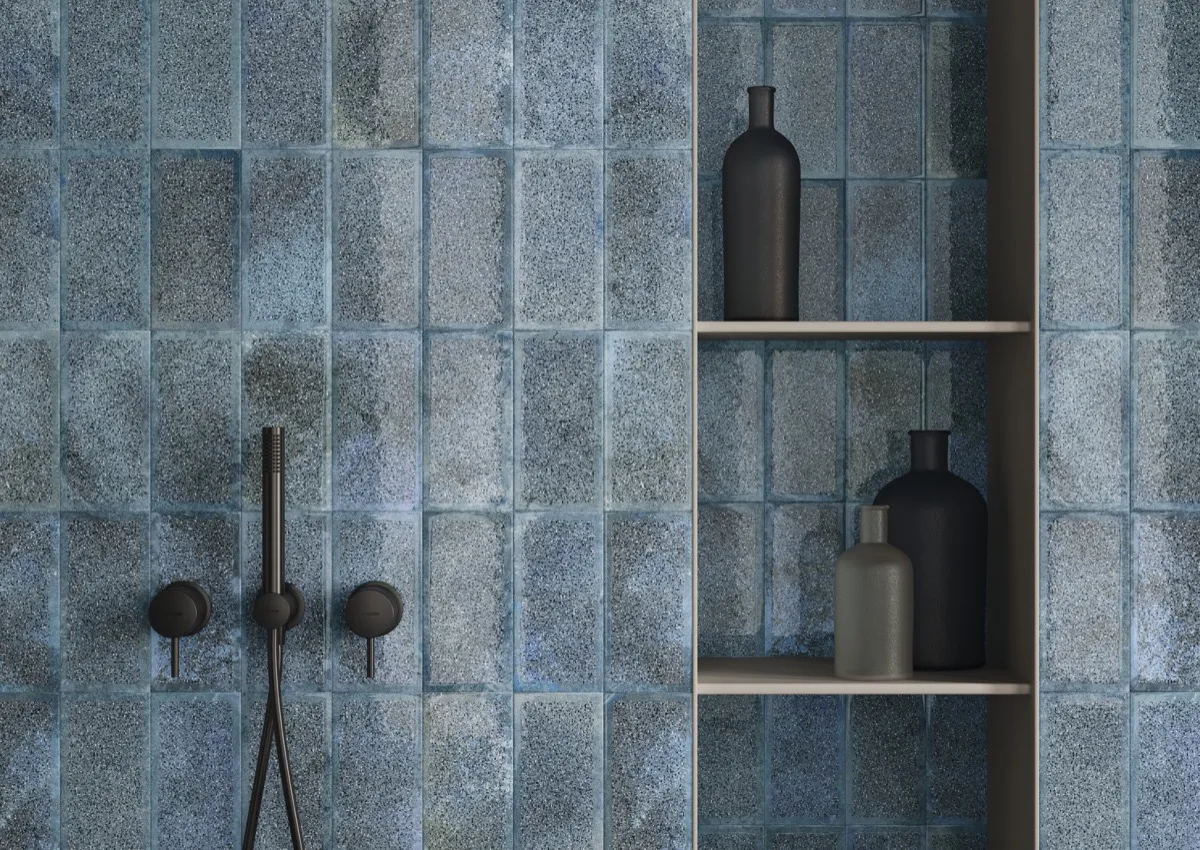
Challenge: The design called for a specific Japanese porcelain tile in every guest bathroom shower. The tile had a distinctive textured glaze and precise dimensions that were central to the designer’s vision. However, the spec’d tile was priced at a significant premium due to brand exclusivity. With 101 showers on the project, the cost impact of this single tile line was substantial.
Solution: Through systematic sourcing, we identified an alternative porcelain tile that matched the exact dimensions, PEI rating, water absorption rate, and visual aesthetic of the original specification. The alternative delivered the same textured glaze appearance the designer had selected.
Result: $45,000 saved on a single product line. The designer approved the alternative through the standard submittal process, confirming that the look, feel, and performance met the original design intent.
Win #2: Guest Room SPC Flooring
Project: 180-room select-service hotel
Challenge: SPC (rigid-core vinyl) flooring was spec’d across all guest rooms and corridors at $2.40/sf. At 180 rooms averaging 350 sf each, that is 63,000 sf of flooring in guest rooms alone. Adding corridor and common area flooring brought the total to approximately 75,000 sf.
Solution: We found a matching SPC product with the same wear layer thickness, the same click-lock profile, and the same visual appearance at $1.40/sf. The alternative came from a manufacturer with established hospitality references and a comparable warranty.
Result: $1.00/sf savings across approximately 75,000 sf total, delivering $75,000 in savings on flooring alone.
SPC flooring is one of the most competitive categories in construction. With dozens of manufacturers producing products at identical specifications, the pricing gap between brands routinely exceeds 40%. The wear layer thickness, click-lock mechanism, and visual print technology are standardized across the industry, which means the performance difference between a $2.40/sf product and a $1.40/sf product is often negligible.
Win #3: Lobby and Restaurant Quartz Countertops
Project: Full-service hotel with signature restaurant and lobby bar
Challenge: Quartz countertops were spec’d at $34/sf for the restaurant bar top, lobby reception desk, and fitness center vanity. Total quartz across the project came to approximately 2,800 sf. At the original specification price, the quartz package alone was nearly $95,000.
Solution: We matched on every critical performance attribute: Mohs hardness, stain resistance, slab thickness (3cm), and surface finish. The alternative quartz product came in at $13/sf, with equivalent color consistency and fabrication compatibility.
Result: $21/sf savings x 2,800 sf = $58,800 in savings. This was the highest percentage savings on the project at 62%, and it demonstrates how wide the pricing gaps can be in the quartz countertop category.
Win #4: Corridor and Guest Room LED Lighting
Project: 220-room extended-stay hotel
Challenge: LED vanity fixtures, corridor sconces, and closet lights were spec’d from a premium lighting brand known for its decorative hospitality line. The combined fixture count across the project was approximately 900 fixtures at an average spec’d price of $160/unit. That put the total lighting package for these three categories at $144,000.
Solution: We matched on lumen output, color temperature (3000K), CRI (90+), IP rating, and fixture finish. The alternative fixtures came from a manufacturer with UL listing and a comparable 5-year warranty. The average alternative price was $103/unit.
Result: $57/unit savings x 900 fixtures = $51,300 in savings. Lighting is a category where the brand premium is especially pronounced, because decorative fixtures carry both a functional and aesthetic markup. By matching both the technical specs and the visual design, the alternatives passed submittal without revision.
Win #5: Guest Room Interior Doors
Project: 150-room boutique hotel
Challenge: Solid-core interior doors with a specific fire rating (20-minute) and STC rating were spec’d for every guest room. Each room required two doors (entry and bathroom), bringing the total to 300 doors at $140/unit. The door specification also called for a specific veneer finish to match the guest room millwork package.
Solution: We identified a matching door with the same core material, same fire rating, same STC rating, and same veneer finish at $72/unit. The alternative manufacturer had an established track record in hospitality projects and could meet the project timeline.
Result: $68/unit savings x 300 doors = $20,400 in savings. While this was the smallest individual win on the list, it illustrates an important point: value engineering works across every finish category, not just the high-profile ones. Doors are easy to overlook, but at 300 units, the savings add up.
Combined Impact: What $200K+ in Savings Means
Total across these five wins: approximately $250,500.
That number is significant on its own, but the real story is what it represents. These savings came from just five product categories on five different projects. Most hotel projects have 15 to 25 or more finish line items that are candidates for value engineering. The five examples above barely scratch the surface of a typical hotel finish schedule.
On a $3M hotel finish budget, applying VE across all eligible categories at the savings rates shown here (36% to 62%) could yield $600K to $1.5M in potential savings. That range depends on the specific products, quantities, and brand premiums in the original spec.
What can those savings fund?
- An upgraded lobby with higher-end millwork, custom lighting, and premium stone that elevates the guest first impression
- A better pool area with upgraded decking, furniture, and landscaping that becomes an amenity guests actually use
- Improved guest room technology including smart thermostats, USB-C charging, and upgraded Wi-Fi infrastructure
- Straight to the bottom line, improving project returns and making the investment thesis stronger
The choice is yours. Value engineering gives you the budget flexibility to make it.
How to Get These Results on Your Hotel Project
Getting started is straightforward. Here is how the process works.
Step 1: Request a free VE report. There is no cost and no commitment. You send us your finish schedule and specifications, and we analyze every line item for savings potential.
Step 2: Receive a line-by-line analysis. Your VE report includes alternatives for each product, with landed costs (product plus freight to your jobsite), savings amounts, and technical comparisons showing how each alternative matches the original spec.
Step 3: Review and approve. Every alternative goes through the standard submittal process for designer approval. No changes happen without your sign-off. You decide which alternatives to accept and which to pass on.
Step 4: Procure with confidence. Approved alternatives are procured with full lead time management and delivery coordination. The savings are locked in at the purchase order, with no surprises at delivery.
Whether your hotel project is in design development, construction documents, or early procurement, there is likely significant savings sitting in your finish schedule. The only way to find out how much is to run the analysis.